Protein balls usually beat protein bars on ingredient quality, because bars depend on binders, syrups, and coatings that balls made from real food do not need. The protein snack market has exploded into a multi-billion dollar industry, and for good reason - we are all looking for convenient ways to fuel our days without reaching for junk food. But walk into any grocery store and you will find yourself staring at an overwhelming wall of protein bars, each one promising clean energy and muscle-building power. What you will rarely see sitting next to them are protein balls, despite the fact that they have been a staple in meal-prep communities and whole-food kitchens for years.
Buying either one in Europe, the label tells you the whole story if you read past the marketing line. EU law requires every binder and sweetener to be listed by name, so a bar hiding syrup behind "natural flavors" still has to admit it further down the ingredients list.
After 20 years in fitness and nutrition, I have watched the protein bar market evolve from a niche bodybuilder product into a mainstream grocery aisle category. The marketing has gotten slicker, but the fundamental question has not changed: are you actually getting quality protein from that bar, or are you getting a candy bar with a protein label?
Let us break it all down -- and this time, with the science to back it up.
What Is Actually Inside a Typical Protein Bar?
Flip over your favorite protein bar and read the ingredient list. If you are like most people, you have never actually done this. Here is what you will typically find:
- Soy protein isolate -- a highly processed protein source stripped from soybeans using chemical solvents. It is cheap to manufacture, which is why it shows up in so many bars.
- Sugar alcohols like maltitol and erythritol -- used to keep the sugar count low on the label while still delivering sweetness. They are technically low-calorie, but they come with digestive consequences.
- Seed oils such as sunflower oil and palm oil -- used as binding agents and to improve mouthfeel. These oils are high in omega-6 fatty acids and are ultra-processed.
- Gums and emulsifiers -- ingredients like cellulose gum, soy lecithin, and carrageenan that hold everything together and create that chewy, uniform texture.
- Artificial sweeteners and flavors -- sucralose, acesulfame potassium, and "natural flavors" that could mean just about anything.
- Fiber additives like soluble corn fiber or inulin -- added to boost the fiber count on the nutrition label, often causing digestive discomfort.
A 2023 paper published in the *Journal of Nutrition* revealed that up to 87% of dietary supplement labels use proprietary blends that hide individual ingredient amounts -- making it impossible for consumers to verify whether ingredients are present at effective doses (Dalton et al., 2023). This practice is rampant in the protein bar market, where "protein blends" list multiple protein sources without telling you how much of each you are actually getting.
What Is Inside Quality Protein Balls?

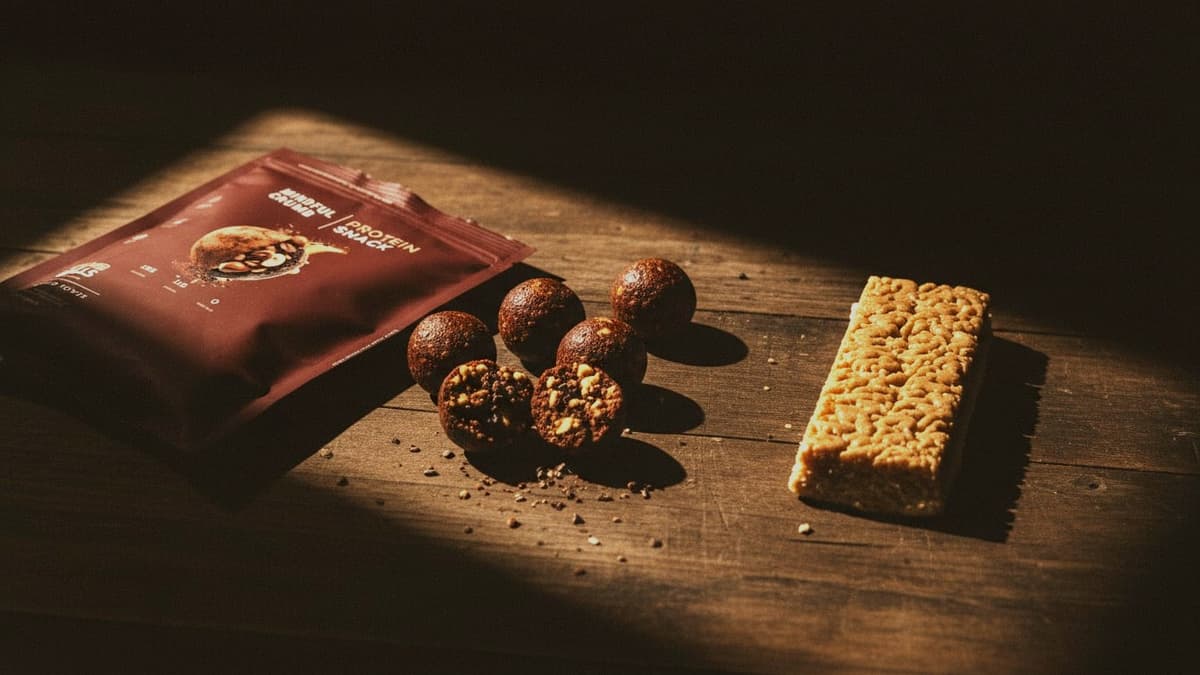
Now let us look at the other side. A well-made protein ball -- like Crumb Balls -- keeps things radically simple:
- Nuts and nut butters -- almonds, cashews, or peanut butter providing healthy fats, fiber, and plant-based protein
- Honey or maple syrup -- natural sweeteners that your body actually knows how to process, used in small amounts
- Whey protein -- minimally processed protein from a single source that delivers a complete amino acid profile
- Oats -- whole grain slow-releasing carbohydrates for sustained energy
- Dark chocolate chips or cacao -- rich in antioxidants and polyphenols
- Coconut, chia seeds, or flaxseed -- nutrient-dense additions that bring omega-3s, fiber, and healthy fats
The ingredient count? Usually somewhere between 5 and 10 whole-food ingredients. You can read every single one out loud without stumbling. That difference alone tells you a lot about which snack is closer to real food.
The Protein Quality Problem: What DIAAS Scores Reveal
Here is where the comparison gets truly interesting, and where recent science has exposed a major gap in the protein bar marketing narrative.
A 2025 study published in *Scientific Reports* evaluated protein bars using the DIAAS (Digestible Indispensable Amino Acid Score) -- the gold standard for measuring how much protein your body can actually use. The results were striking: protein bars showed dramatically lower protein digestibility (47-81%) compared to their protein sources in isolation. The highest DIAAS score recorded for any bar was only 61% for a milk-protein-based bar (Keller et al., 2025).
What does that mean in practical terms? If your protein bar claims 20 grams of protein on the label, your body may only be able to use 9 to 16 grams of it. The rest is effectively wasted -- oxidised for energy or excreted rather than contributing to muscle protein synthesis.
The researchers identified the cause as "matrix effects": sugars, fats, and binding agents in the bar physically interfere with your digestive enzymes' access to the protein. Maillard reactions during processing -- the same browning reactions that make the bar taste good -- reduce lysine availability, one of the most critical amino acids for muscle building.
Protein balls, by contrast, use minimal processing. There is no baking, no extrusion, no high-heat manufacturing. The protein in a quality protein ball is mixed into a whole-food matrix at room temperature, preserving its digestibility. When you eat a protein ball with 10 grams of whey protein, you are getting closer to 10 grams of *usable* protein.
Research from McMaster University confirmed that whey protein stimulates muscle protein synthesis 122% more than casein after resistance exercise (Tang et al., 2009). But that advantage only holds when the protein is in a bioavailable form -- which is precisely what heavy processing compromises.
Nutritional Comparison: Protein Balls vs Protein Bars
Let us put them side by side with these typical values for a single serving:
Typical Protein Bar (60-65g serving)
- Calories: 200-250
- Protein: 20-25g (label claim; effective delivery ~10-16g based on DIAAS)
- Fat: 7-10g (often from seed oils)
- Carbs: 20-30g
- Sugar alcohols: 5-15g
- Fiber: 10-15g (mostly added fiber)
- Ingredient count: 15-30
Typical Protein Ball (35-40g serving)
- Calories: 130-180
- Protein: 8-12g (higher bioavailability from minimal processing)
- Fat: 7-10g (from nuts and coconut)
- Carbs: 12-18g
- Sugar alcohols: 0g
- Fiber: 2-4g (naturally occurring)
- Ingredient count: 5-10
At first glance, the protein bar seems to win on raw protein content. But when you account for the DIAAS research, the gap in *usable* protein narrows dramatically. And the protein in quality protein balls comes from whey, nuts, and seeds -- sources your body absorbs efficiently and that come packaged with beneficial micronutrients.
The Seed Oil Problem
The conversation around seed oils is grounded in well-established biochemistry. A landmark review in *Biomedicine & Pharmacotherapy* found that the Western diet provides 15 to 17 times more omega-6 than omega-3 -- compared to the approximately 1:1 ratio humans evolved on -- and that this imbalance promotes chronic inflammation linked to cardiovascular disease, cancer, and autoimmune conditions (Simopoulos, 2002).
A 2018 review added important nuance: while linoleic acid from seed oils does not always directly increase inflammatory markers in healthy adults, its oxidized metabolites -- which form during high-heat processing like the kind used to manufacture protein bars -- activate NF-kB, a key inflammatory pathway (Innes & Calder, 2018).
Most protein bars contain one or more seed oils because they are cheap, shelf-stable, and create a smooth texture. Protein balls made with whole-food ingredients sidestep this entirely. The fats come from nuts, coconut, and occasionally coconut oil -- all sources with a healthier fatty acid profile.
Digestion: The Uncomfortable Truth About Protein Bars
A significant number of people experience digestive discomfort after eating protein bars. The culprits are well-documented:
- Sugar alcohols -- maltitol is notorious for causing gas and bloating. Your gut bacteria ferment these partially digested sweeteners, producing gas as a byproduct.
- Fiber additives -- soluble corn fiber and inulin behave differently than the fiber naturally found in whole foods. They can cause significant bloating in sensitive individuals.
- Carrageenan -- a comprehensive review in *Environmental Health Perspectives* found that both degraded and food-grade carrageenan were associated with intestinal ulceration and inflammation in animal studies. The author called for "reconsideration of the widespread use of carrageenan" in the food supply (Tobacman, 2001).
Protein balls made from whole ingredients rarely cause these issues. The fiber comes from oats and nuts, the sweetness comes from honey, and there are no sugar alcohols or gums involved. Your digestive system handles real food far more gracefully than it handles food science experiments.
The Bioactive Advantage of Whey-Based Protein Balls
Here is something that never makes it onto protein bar packaging: the form of protein matters beyond just amino acid content. A comprehensive review in *Alternative Medicine Review* identified lactoferrin, immunoglobulins, and glycomacropeptide as key immune-supporting bioactives naturally present in whey protein concentrate (Marshall, 2004). These compounds support gut health, immune function, and even have antimicrobial properties.
The problem is that aggressive processing -- the kind used in protein bar manufacturing -- destroys these bioactives. High-heat extrusion, the binding process, and the chemical environment inside a processed bar all degrade these sensitive compounds.
Protein balls that use minimally processed whey protein concentrate, mixed at low temperatures, retain far more of these beneficial bioactives. You are not just getting protein -- you are getting the full spectrum of what makes whey special.
When to Eat Each: The Practical Guide
Being balanced here matters, because both formats have their strengths in different situations.
Pre-Workout (Winner: Protein Balls)
Protein balls offer a balanced combination of quick-digesting carbs from honey and slow-releasing energy from oats and nuts. They are less likely to sit heavy in your stomach. Eat one 30 to 45 minutes before training.
Post-Workout (Winner: Tie)
Both can work. A protein ball paired with a whey shake gives you whole-food recovery plus rapid amino acid delivery without the additives. For gym-specific recommendations, check our guide to high protein snacks for gym goers.
Desk Snack (Winner: Protein Balls)
A protein ball provides sustained energy without the blood sugar spike and crash from sugar alcohols and processed carbs. At a smaller serving size, it curbs hunger without making you feel overly full.
Travel and On-the-Go (Winner: Protein Bars)
This is where bars genuinely shine. They are individually wrapped, shelf-stable for months, and do not melt or crumble easily. Protein balls typically need refrigeration and have a shorter shelf life.
Kids and Family Snacking (Winner: Protein Balls)
The simpler ingredient list is a clear advantage. You can read every ingredient to your kids and they will actually understand what they are eating.
The Verdict
Are protein balls healthier than protein bars? When you factor in the DIAAS research on actual protein delivery, the seed oil and additive profiles, the digestive impact, and the preservation of whey bioactives, the answer is yes -- in most scenarios.
Protein balls win on ingredient quality, usable protein delivery, digestibility, and alignment with a whole-food approach to nutrition. Protein bars win in one category: convenience and shelf stability for travel.
But here is the bottom line. The best protein balls deliver real nutrition from real food. The best protein bars deliver decent macros from food science. Both will give you protein on the label. Only one will give you protein your body can fully use, without the long ingredient list of things it does not need.
If you are ready to make the switch, try Crumb Balls -- made with simple, whole-food ingredients and designed to taste like a treat while fueling your body the right way.
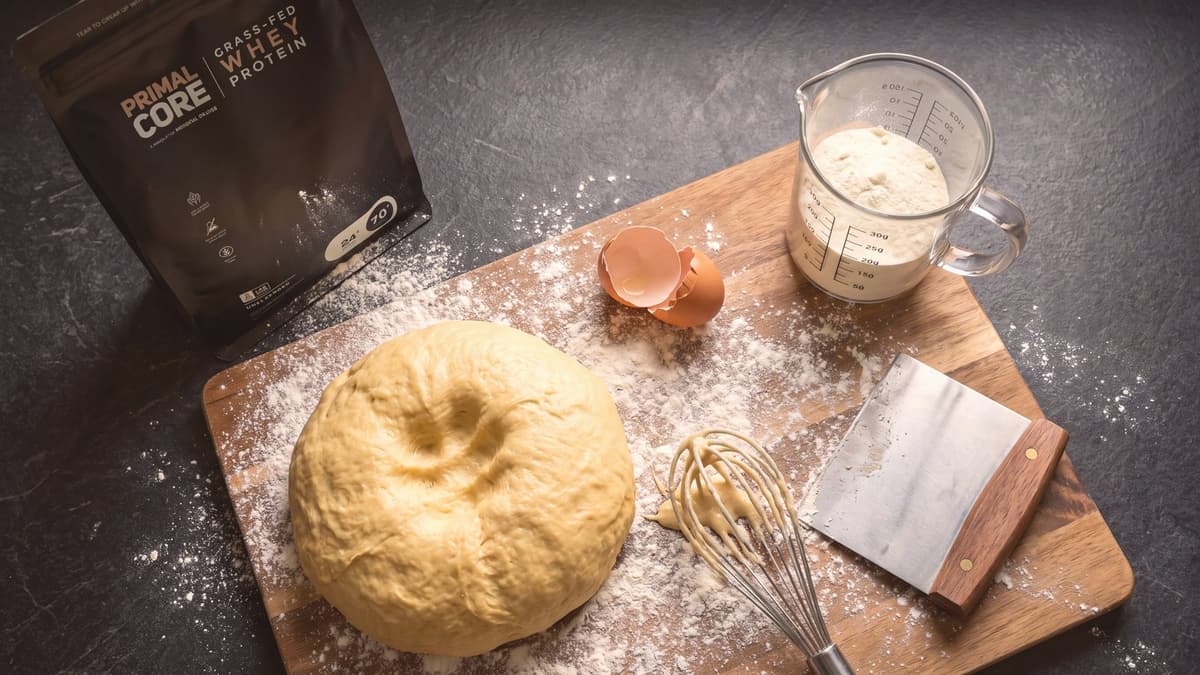
And if the powder is the next question, Primal Core grass-fed whey is one ingredient, 24g of protein a sachet, shipped across the EU.
Keep Reading
If you are on GLP-1 medications and looking for portion-controlled protein snacks, our GLP-1 friendly protein snacks guide covers exactly how to hit your protein targets on Ozempic, Wegovy, and Mounjaro. The full one-day GLP-1 protein protocol with timing and volumes is at the best protein powder on GLP-1 medications. And for a decadent take on protein balls, see how Crumb Balls became a healthy Ferrero Rocher alternative.
Frequently Asked Questions
What are Crumb Balls made of?
Organic Medjool dates, raw cacao, grass-fed whey protein concentrate, and a touch of coconut oil. That's it - no added sugar, no seed oils, no preservatives, no artificial anything.
How much protein is in each Crumb Ball?
Each Crumb Ball contains approximately 5g of protein from grass-fed whey concentrate. A serving of 3 balls gives you 15g of clean protein as a snack.
Are Crumb Balls a good alternative to protein bars?
Yes. Most protein bars contain 10-20 ingredients including seed oils, artificial sweeteners, and emulsifiers. Crumb Balls have 4 whole-food ingredients and deliver real protein without the gut disruption.
How should I store Crumb Balls?
Store in a cool, dry place. For best texture, keep them in the fridge. They last up to 3 months sealed and 2 weeks after opening.
Are protein balls healthier than protein bars?
Generally, yes - and it comes down to ingredients. Most protein bars rely on sugar alcohols (maltitol), seed oils, soy protein isolate, and binding agents. Protein balls like our Crumb Balls use whole-food ingredients: real nut butters, raw honey, and grass-fed whey. You get cleaner macros, better digestion, and no ultra-processed fillers.
Sources & References
- 1.Keller et al. (2025) – Protein bar quality and DIAAS assessment
- 2.Dalton et al. (2023) – Proprietary blends in dietary supplements
- 3.Simopoulos (2002) – Omega-6/omega-3 ratio and inflammation
- 4.Innes & Calder (2018) – Omega-6 fatty acids and inflammation
- 5.Tobacman (2001) – Carrageenan and gastrointestinal effects
- 6.Tang et al. (2009) – Whey vs casein vs soy for muscle protein synthesis
- 7.Marshall (2004) – Therapeutic applications of whey protein