Single-serve sachets keep protein fresher and dose it more accurately than tubs, which win only on upfront price per gram. Walk into any supplement store or scroll through any fitness retailer, and you will notice something immediately: protein powder comes in tubs. Big tubs, small tubs, tubs with bold graphics and promises on the label. It is the default format, and most people never stop to question whether it is actually the best one.
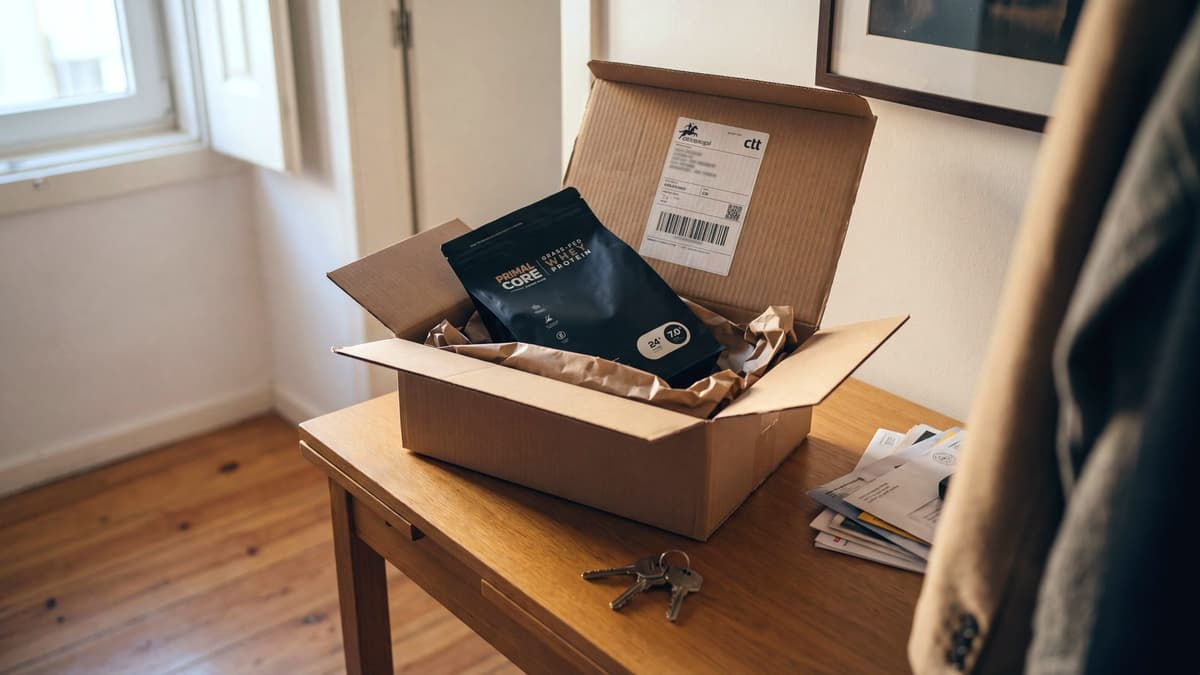
Sachets travel better across borders too. Ours ship from Porto for seven euro within Portugal, eight to Spain, twelve to twenty for the rest of the EU, and free over a hundred to Portugal and Spain - a sealed sachet survives that trip a lot better than a tub with a loose scoop rattling around inside.
But over the last few years, a quieter alternative has been gaining ground -- single serve protein sachets. Not the flimsy sample packets brands hand out at expos, but properly engineered, individually sealed portions designed to be a primary format rather than an afterthought.
After two decades in fitness, I have seen how the small practical details -- the ones that seem trivial -- often determine whether someone actually sticks with their nutrition plan. The format of your protein is one of those details. Let me break it down honestly.
The Freshness Problem Nobody Mentions
Here is something the supplement industry rarely talks about: protein powder degrades over time once exposed to air.
Every time you pop the lid off a tub, you expose the entire contents to oxygen, moisture, and ambient light. This triggers a slow but measurable process called oxidation. The fats in whey protein -- yes, even low-fat formulas contain some -- begin to break down. Moisture creeps in and can cause clumping. The flavour profile shifts. If you live somewhere humid, this accelerates significantly.
A typical 2 kg tub might last a casual user two to three months. By the end of that window, the powder at the bottom of the tub has been exposed to dozens of lid openings. It is not spoiled in the way that milk goes off, but it is objectively less fresh than the day you opened it.
This is the core advantage of protein sachets when it comes to product integrity. Each sachet is individually sealed at the point of manufacture. The portion you open on day sixty is exactly as fresh as the one you opened on day one. No cumulative air exposure, no moisture ingress, no slow degradation.
Portion Control and Why Dosage Science Matters

Scooping protein powder sounds simple, but studies on self-measured food portions consistently show that people are remarkably bad at it. A "heaping scoop" versus a "level scoop" can vary by 20 to 30 percent in actual protein content.
This matters more than you might think, because protein dosage has a direct impact on muscle protein synthesis. The original dose-response study found that 20 grams of protein per meal is the threshold for maximising muscle protein synthesis in young, active adults weighing approximately 80 kg (Moore et al., 2009, *American Journal of Clinical Nutrition*). Research published in the *American Journal of Clinical Nutrition* confirmed that a 20g dose of whey protein maximally stimulated muscle protein synthesis in resistance-trained men, while consuming 40g increased protein oxidation without additional anabolic benefit (Witard et al., 2014).
However, a 2016 study found that 40 grams of whey protein produced greater muscle protein synthesis than 20 grams following whole-body resistance exercise -- suggesting the 20g "ceiling" may only apply to single-muscle-group workouts (Macnaughton et al., 2016, *Physiological Reports*).
The largest meta-analysis on protein and muscle gain, published in the *British Journal of Sports Medicine*, analysed 49 studies and found that protein supplementation benefits plateau at 1.62 g/kg/day (Morton et al., 2018). A 2018 review recommends distributing protein across at least four meals of 0.4 g/kg each to maximise muscle anabolism (Schoenfeld & Aragon, 2018).
What does all this mean for the sachets vs tubs debate? Dosage precision matters. If your plan calls for 25 grams of protein per serving based on your body weight and training style, a sachet delivers exactly that. Every time. No kitchen scale required, no scooping variance, no guessing.
For people using GLP-1 medications where precise protein intake supports muscle preservation during weight loss, this kind of portion control is not a luxury -- it is genuinely important.
Travel and Portability: Where Sachets Win Decisively
This is where the format comparison stops being subtle and becomes obvious. Try taking a tub of protein through airport security. Try fitting one in a carry-on alongside your clothes, laptop, and toiletries.
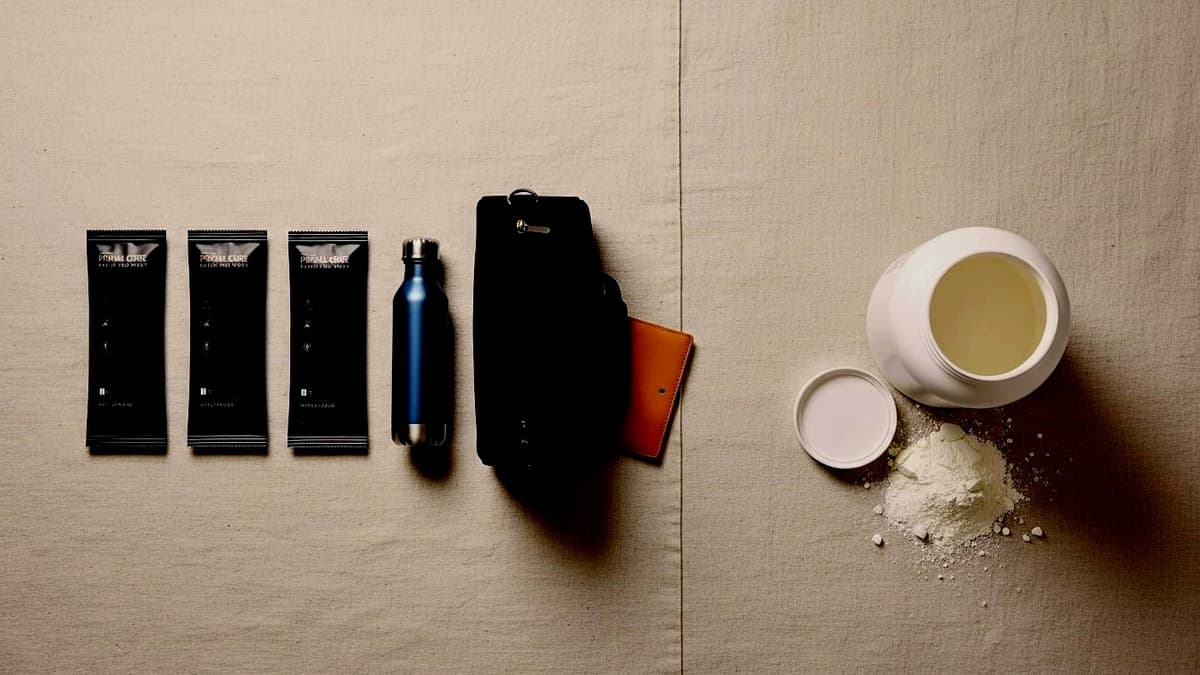
Travel friendly protein sachets solve every one of these problems. They are TSA and EU security compliant -- sealed, labelled, and clearly identifiable as a food product. They lie flat in a suitcase, tuck into the side pocket of a gym kit, or slide into an office desk drawer without taking up meaningful space.
This portability extends beyond travel. A sachet in your laptop sleeve means you always have protein available after a lunchtime gym session. A few sachets in your office drawer mean you are never stuck relying on vending machines during a long afternoon.
Our Primal Core sachets were designed with exactly this lifestyle in mind -- grass-fed, low-lactose whey in a format that goes wherever you go. For a deeper dive on travelling with protein, our travel sachets guide covers everything from packing strategies to international regulations.
The Waste Question
Here is a scenario that plays out in kitchens everywhere: someone buys a tub of protein with good intentions, uses it consistently for three weeks, then life gets busy. The tub sits on the shelf. Weeks pass. Eventually they come back to it, notice it tastes a bit stale or has clumped, and throw the remaining third away.
Half-used tubs going stale is one of the most common forms of supplement waste. You paid for the full tub but consumed two-thirds of it.
Protein sachets reduce this waste dramatically. Each sachet is a self-contained unit. If you skip a week, nothing else is affected. There is no open container slowly degrading on your shelf.
For people who are new to protein supplementation and not yet sure how much they will actually use, sachets are a particularly smart starting point. You are not committing to a kilogram or two of product you might not finish.
The Honest Cost Comparison
Let us address the elephant in the room: sachets cost more per serving than tubs. This is true on a straight unit-price comparison, and there is no way around it. Individual packaging, sealing, and smaller production runs all add cost.
But the real question is not "what is the price per serving" -- it is "what is the price per serving I actually consume?"
If you finish every tub you buy, down to the last scoop, a tub is almost certainly cheaper. Full stop. But if you have ever thrown away expired or stale protein -- even once -- the math changes. If you have ever bought a flavour you did not like and forced yourself through a kilogram of it (or gave up halfway), the math changes further.
When you factor in waste reduction, the net cost of sachets and tubs is closer than the sticker price suggests.
Who Sachets Are Perfect For
Not everyone needs to switch to sachets, but certain lifestyles align perfectly with the format:
- Frequent travellers who need protein on the road without the bulk and hassle of tubs
- GLP-1 medication users who need precise, consistent protein portions as part of their treatment plan
- Office workers who want a convenient protein source at their desk
- People trying protein for the first time who want to sample before committing to a large quantity
- Gym-goers with busy schedules who mix shakes in the car, at the gym, or between meetings
- Anyone who has wasted protein before by letting tubs go stale or expire
Who Should Stick With Tubs
Balance matters, and tubs genuinely are the better choice for some people:
- Daily home users who go through protein consistently and quickly -- if you are making a shake every morning at the same kitchen counter, a tub is more practical and economical
- Bakers and recipe makers who use protein powder in cooking, where you need flexible amounts rather than fixed portions
- High-volume users consuming multiple shakes per day -- the cost savings of buying in bulk are significant at that usage level
- People with established routines who finish tubs well before any freshness concerns arise
Finding Your Format
The protein format debate is not really about one format being superior to the other. It is about matching the format to your life. A tub sitting on the kitchen counter of someone who trains at home every day is perfect. That same tub shoved into a suitcase for a work trip is a disaster.
Think about where and when you actually consume protein. Think about how much you waste. Think about whether the dosage science -- the 20g threshold, the 0.4 g/kg per meal guideline -- matters to your specific goals. Then choose accordingly -- or better yet, use both. A tub at home for daily use and a box of sachets for everything else is a combination that covers virtually every scenario.
The best protein format is the one that means you actually hit your protein targets consistently, wherever life takes you.
Keep Reading
For tips on using protein sachets while traveling, read our guide to travel-size protein sachets. And if you want the science behind why clean whey supports your gut, our buyer's guide to the best protein for gut health covers what to look for. The 30g sachet format is also the dominant pattern for GLP-1 patients on Ozempic, Wegovy, and Mounjaro because the small portion size sits well under the delayed-gastric-emptying tolerance threshold. And for a comparison of how single-ingredient sachets perform against MyProtein and other big brands, see our honest 6-brand alternatives breakdown.
Frequently Asked Questions
What is a Primal Core protein sachet?
A single-serving 30g sachet containing one ingredient: grass-fed whey protein concentrate. Each sachet delivers 24g of protein and is nitrogen-sealed for freshness. Perfect for travel, gym bags, or daily use without needing a bulky tub.
Are protein sachets better than tubs?
Sachets offer several advantages: precise portion control, no oxidation (each sachet is sealed), TSA and EU carry-on friendly for travel, and no contamination risk from shared scoops. The protein inside is identical to our tub - just more convenient.
Can I take protein sachets on a plane?
Yes. Our 30g sachets are TSA and EU security compliant for carry-on luggage. They are sealed, clearly labeled, and eliminate the need to carry bulk powder through security.
How much protein is in each Primal Core sachet?
Each 30g sachet contains approximately 24g of protein, less than 2g of fat, and under 3g of carbohydrates. The exact macros are on every sachet and product page.
Can I travel with your protein sachets?
Yes! Our individual 30g sachets are designed for travel. They're TSA and EU security compliant, fit easily in hand luggage, and eliminate the need to carry bulky tubs. Each sachet is also nitrogen-sealed for freshness, so they maintain full quality wherever you go.
Sources & References
- 1.Morton et al. (2018) – Protein supplementation meta-analysis (1.6 g/kg dosage)
- 2.Schoenfeld & Aragon (2018) – Protein per meal for muscle building
- 3.Moore et al. (2009) – 20g per-meal dose response for MPS
- 4.Witard et al. (2014) – Whey-specific dose response
- 5.Macnaughton et al. (2016) – 40g exception for whole-body training